

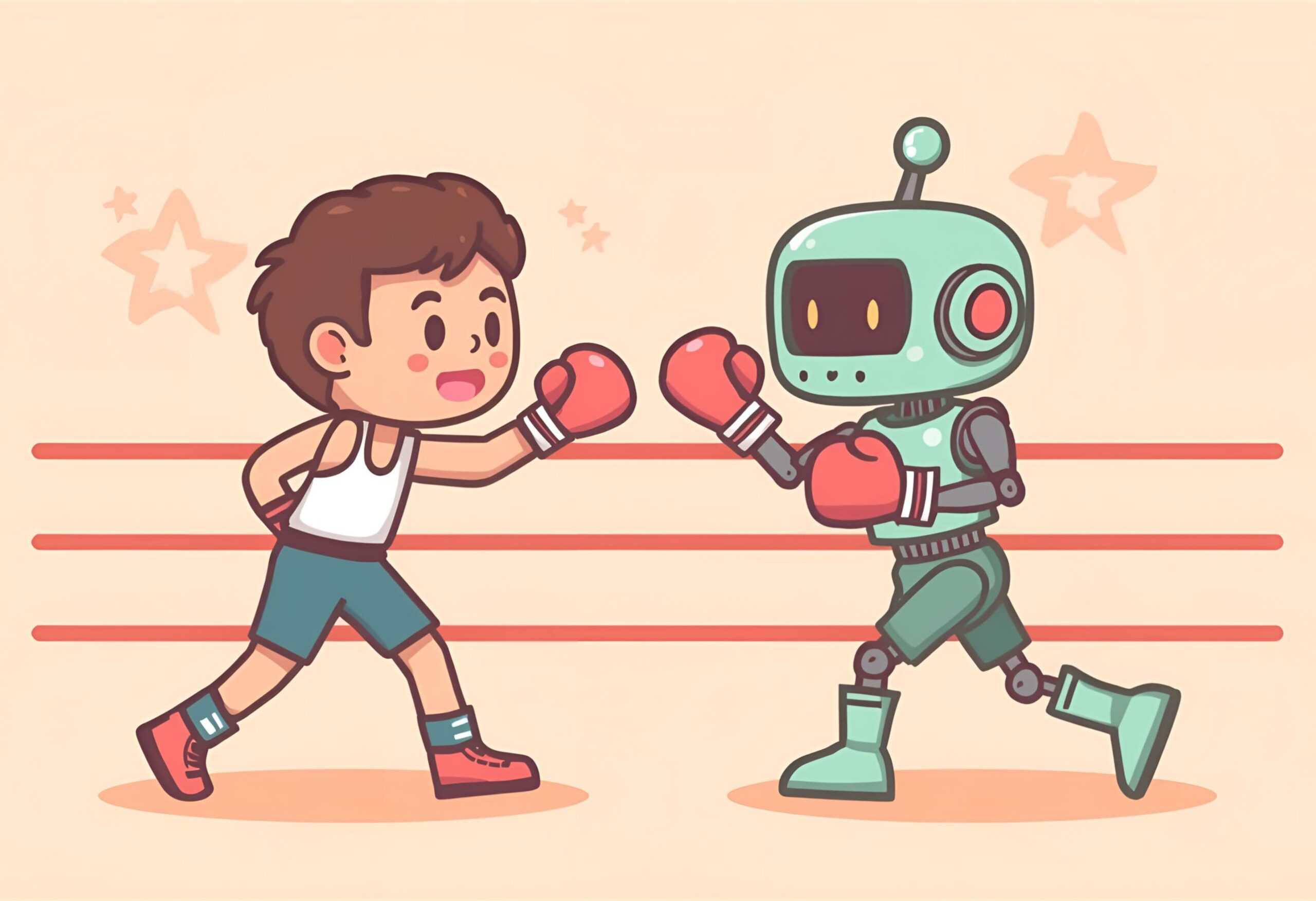

If you’ve logged into Google Ads recently and thought, “Hang on… who wrote that headline?” – you’re not imagining things.
AI is quietly (and sometimes not so quietly) moving into the driver’s seat of digital marketing. From automatically generated ad headlines to ‘helpful’ recommendations designed to boost conversions, platforms like Google Ads are increasingly saying:
“Don’t worry, we’ve got this.”
But anyone who’s actually run campaigns knows… it doesn’t always work the way it promises.
So that begs a bigger question:
If AI can optimise bids, audiences and copy – do we still need human copywriters at all?
This exact question formed the basis of a research project I completed as part of my Masters of Digital Communication. And instead of debating it theoretically, I decided to put AI and humans head-to-head where it really counts: Advertising headlines that are meant to make people feel something.
Let’s unpack what I found – minus the academic jargon, and with a bit more real‑world context.

The chef and the oven 🍳
Think of digital marketing like a professional kitchen.
AI is the industrial-grade appliance:
- Fast
- Efficient
- Incredible at repetition
- Never forgets a recipe
Human marketers are the chefs:
- They taste as they go
- Adjust seasoning instinctively
- Know when a dish needs something extra
Now imagine the oven deciding it knows better than the chef and changing the recipe mid-service.
That’s essentially what we’re seeing with platforms like Google Ads auto-generating headlines, combining assets, and optimising for conversions based purely on data.
Sometimes? It works beautifully.
Other times? You end up with ads that technically follow best practice… but feel cold, generic or just off.

Why human connection still matters (even in automated ads)
Yes, online advertising is becoming largely automated now.
Bidding, targeting, delivery, optimisation – it can all be handled by machines.
But copywriting sits in a slightly awkward space.
Because great copy isn’t just about clarity or keywords. It’s about:
- Emotion
- Empathy
- Values
- Aspiration
These are messy, human things.
AI is excellent at spotting patterns. Humans are better at understanding meaning.
And when you’re selling something tied to identity, self‑esteem, health or values (hello cosmetics, wellness, education, services…), that difference matters.

How we measured “connection” (without guesswork)
To keep this grounded, I used the AIDA framework, a classic marketing model that maps how people respond to advertising:
- Attention – Did it stop you?
- Interest – Did you want to keep reading?
- Desire – Did you actually want the product?
- Action – Would you click or buy?
For this study, the spotlight was on the last two stages — desire and action — because that’s where emotional connection (or lack of it) really shows up.
The experiment: AI copy vs human copy
Participants were shown two Google-style ads for the same cosmetic product:


No labels. No clues. Just the copy.
They were asked:
- Which ad they felt more connected to
- Which one made them want the product
- Which one made them more likely to take action
- And importantly, why.
The results: not as black and white as you’d think
At first glance, the outcome looked decisive:
👉 70% of participants preferred the human-written ad.

Case closed, right?
Not quite.
When participants rated desire and action on a scale, the gap between AI and human copy was surprisingly small, roughly 5–12%.
Translation:
- Human copy still wins
- But AI copy is closer than some people expect
This mirrors what many marketers see in Google Ads today. Auto-generated assets don’t usually tank performance, but they rarely elevate it either.
So what was the real difference?
Where AI and Humans Actually Diverge
Once participants explained their reasoning, four clear themes emerged.
1. Readability: clear vs considered
AI copy tended to:
- Stack benefits quickly
- Be literal and direct
- Prioritise efficiency
Human copy tended to:
- Flow more naturally
- Feel intentional
- Have a recognisable “voice”
Some people loved the directness of the AI. Others found it robotic or rushed.
This is exactly what we see when Google auto-combines headlines — technically fine, emotionally hit-or-miss.
2. Ethical language & the buzzword problem
Words like ethical, natural and organic showed up in both ads.
But perception varied:
- Younger participants saw this language as value-aligned
- Older participants were more sceptical and saw it as marketing fluff
AI used these terms correctly — but safely. Human copy provided context and nuance.
That subtle difference had a big impact on trust.

3. Aspiration vs assurance
AI copy focused on outcomes:
- Clear skin
- Free shipping
- Immediate benefits
Human copy leaned into aspiration:
- “Glow from within”
- “Flawless finish”
- “Conscious woman”
Neither approach was wrong, but aspiration triggered stronger emotional responses (both positive and negative).
AI doesn’t yet know when a phrase inspires… or when it accidentally alienates.
4. The ‘but I still gave questions’ factor
Across the board, participants wanted more concrete information:
Pricing. Ingredients. Proof.
Which highlights an important truth:
Emotional copy works best when it’s backed by rational clarity.
No amount of optimisation can replace that balance.

So… can AI create human connection?
Short answer?
Yes — but not instinctively.
AI can:
- Follow proven frameworks
- Trigger surface-level desire
- Encourage action in predictable ways
But it struggles to:
- Understand values in context
- Anticipate emotional reactions
- Adjust tone with empathy
Which is why auto-generated ads often feel acceptable — but rarely memorable.
What this means for marketers (and why this isn’t bad news)
This research doesn’t suggest humans are being replaced.
It suggests roles are shifting.
The most effective setups going forward will look something like this:
- Humans define strategy, audience and emotional intent
- AI generates and tests variations at scale
- Humans refine, edit and inject meaning
In other words, AI becomes the appliance, not the chef.

The takeaway
AI copywriting tools (and platform-led automation like Google Ads) are powerful.
But connection isn’t created by optimisation alone.
It comes from understanding:
- Who you’re talking to
- What they care about
- And how they want to feel
For now, that still requires a human in the loop.
And honestly?
That’s not a weakness of AI, it’s a reminder of what good marketing has always been about.